As a lifelong Blue Jays fan who worked selling popcorn as a teenager at Exhibition Stadium in the team’s first two years of existence from 1977-1978, I was delighted with the outcome of Monday’s game seven. After all, World Series appearances are rare enough; my memories of the back-to-back championships of ’92 and’93 are getting a bit hazy. I still remember exactly where I was watching those final games and I certainly remember the last at bats. Some of the other details are dimming, and I would prefer to attribute this to the number of years gone by rather than any diminishing capacity on my part. Whatever happens in the upcoming finale with the Dodgers, just getting there is an accomplishment worth celebrating.
Yet a part of me was thinking not just of the jubilant Jays, their families hustling on to the field, the delirious fans in the stadium and the millions jumping up and down in their family rooms, but rather of the vanquished Mariners. This, of course, is the Blue Jays twin franchise, birthed in the same year of 1977, and it has never managed to attain the lofty heights of the World Series. They came achingly close this time. Up two games to none going home for three, then up three games to two, and up through six innings of game seven. Undoubtedly, they likely felt this was their year. Having outdistanced the Astros for the division, with the Yankees and the Red Sox out of the way and having outlasted the Tigers in a memorable fifteen inning deciding game, they must have felt that destiny was finally riding shotgun with them. To then have things wrenched away by one swing of the bat must leave a hollow feeling. To consider all the pitches thrown over those 162 regular season games and the 12 playoff games that followed, and the hope that the players and fans carried over those eight months and then realize that it all vanished in one swing of the bat is to understand that baseball is an especially cruel game.
Of course, as a Toronto sports fan, part of me thought about those poor Mariner players lingering in the dugout watching the official and unofficial on field celebrations; they looked like ghosts unable to move, forced to watch the victory party as part of some instinctual need to make the unimaginable real. For who amongst Toronto fans has not been in that dugout too, forced to watch other teams rejoice, staring in a daze as the shattered athletes speak numbly into reporters’ microphones, and quietly pack up their equipment to await another year? It may be that the trauma of being a Toronto sports fan has resulted in my having an overdeveloped empathy for the heartbreak of others. And yes, I know that some Seattle fans cheered when the heroic Springer was kneecapped by a Brian Woo fastball, but you can’t condemn an entire fan base for the actions of a callous few. And yes, I know Seattle is an American city and we continue to find ourselves in the midst of a trade war with the U.S. But that doesn’t mean their pain was any less real.
As the League Championship Trophy was being presented to the Blue Jays, I was hoping that someone would spare a thought for the Mariners amidst the Dionysian fervour. Could someone not recognize a Seattle team that had a great season and came one run short? Could someone not offer them some hope that one day they will arrive in that promised land that has been so elusive? Apparently not. Baseball lacks the closure of the handshake lineup that distinguishes hockey. And on this evening of wild abandon, as the CEOs and Executives stepped to the microphone, it was as if there wasn’t even another team playing. They were made invisible. With all the gushing about “a great group of guys”, I kept waiting for someone from that great group to acknowledge the Mariners, their season, their pain. None was forthcoming.
Nor did reporters ask Schneider about his managerial counterpart Dan Wilson or about his thoughts on how tough this had to be on the opposing team. Maybe if you’ve waited your whole life for something and you get there, you take a moment to consider the people who have waited even longer and are still waiting. And so, in the midst of the jubilation, a part of me is a bit sad that the victors could not take even a moment out of their revelry to consider the flip side, the crushing of hope and the long wait for spring training. How hard would it have been to spare a few words of encouragement to an organizaton that has been waiting almost fifty years to contend for a championship? Yes, it would have just been words. But when the game is over, words are all any fan has to hang onto.
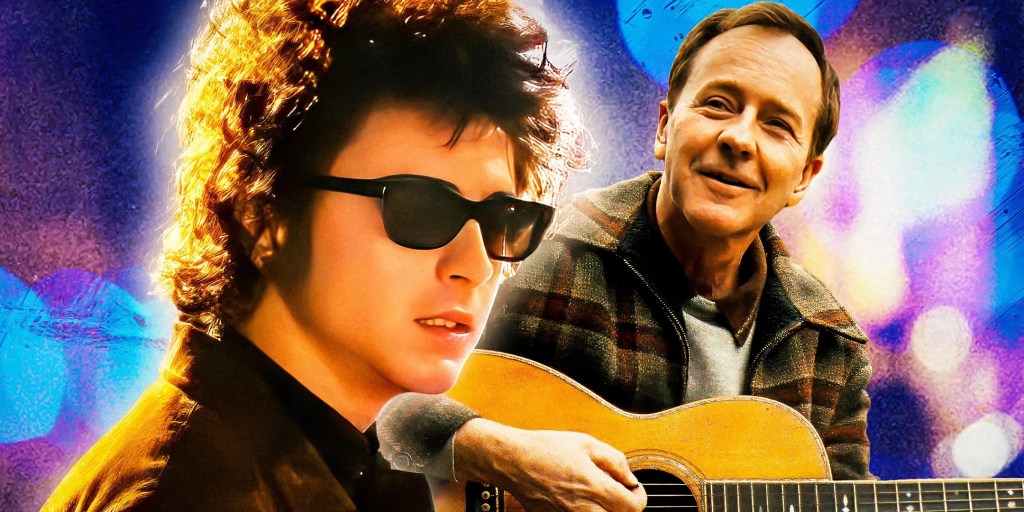
I greatly enjoyed A Complete Unknown, the Bob Dylan biopic starring Timothée Chalamet. For Dylan fans like me, the movie offers little that is new as it covers the well documented time period from Dylan’s 1961 arrival in New York to his performance at the 1965 Newport Folk Festival. The key players in these years are familiar: girlfriend Suze Rotolo (called Sylvie in the movie), fellow folkie Joan Baez, folk legends Woody Guthrie and Pete Seeger, and manager Albert Grossman among them. Dylan’s meteoric rise from the vagabond singer songwriter playing Greenwich Village café basements to the international superstar who could fill concert halls is similarly well trod territory and the movie provides little in the way of fresh revelations. Still, the movie delights, largely because of the uncanny performance of Chalamet as Dylan. Not only does Chalamet nail the look and the smug delivery of lines, but he sings and plays guitar and harmonica in the film. Those people who cannot stand Dylan’s voice might actually consider the fact that it is Chalamet singing as a distinct advantage of the film. His performance is the wonder of the film, though the supporting cast is also terrific.
Chalamet on the left and the actual mid 60″s Dylan on the right
While the film is certainly based on real events, it would be unwise to believe every scene actually happened as portrayed. Biopics tend to compress and simplify, and this one is no exception. So, while it is generally accepted as fact that Dylan went to visit a dying Woody Guthrie in a New Jersey hospital shortly after Dylan arrived in New York, the subsequent visits and the presence of Pete Seeger might be fictional. But the veering from the actual in no way detracts from the essence of Dylan’s idolization of Guthrie. Similarly, while Dylan was undoubtedly romantically linked to both Rotolo and Baez, the course of those intertwined relationships might differ somewhat from the timing of the film. To its credit though, the film does not alter these to make Dylan admirable. On the contrary, the film does an excellent job of portraying Dylan’s exploitative nature in these relationships. He has no qualms about re-entering the lives of these women whenever he needs them, no matter how much time has passed since his last contact and no matter what ungodly hour of the night it might be. In one particularly revealing scene, Dylan arrives at the Chelsea Hotel in the middle of the night and begins knocking on doors till he finds Baez. Later, when Baez awakes from a post-coital slumber, it is to Dylan playing her guitar and working out lyrics for a new song. She angrily asks if he has come there so she could watch him write. When Dylan refuses to see what she’s upset about, she tosses him out. Like many of the biographies of Dylan, the film suggests he is an incredibly talented artist, but a problematic human being who expected women (at this stage in his life anyways) to stop anything they were doing to be with him. Elle Fanning (as Sylvie) and Monica Barbaro (as Baez) are both fabulous in representing the gravitational pull of Dylan and the inevitable diminishment that comes from being sucked into orbiting him.
Rotolo and Fanning Baez and Barbaro
Of course, the central tension in the film is Dylan versus the traditional folk music community. The film suggests that Seeger helped pave the way for Dylan to be embraced by a ready-made musical community. There can be no doubt that Dylan’s success was accelerated by the existing folk music infrastructure. Right from the start though, Dylan bristles at the simplistic labelling of musicians. In a scene that seems a bit self-conscious, Dylan drags Sylvie to an old Bette Davis movie and then afterwards defends the character’s transformation from Sylvie’s accusations of ‘reinventing’ herself. For Dylan, the character was presenting herself as she needed to be at that moment. Dylan simply would not allow others to label him, whether as a folk musician or a spokesman for a generation. He seems to recoil with indignation when people expect something of him. Which leads to the climax of the film, the 1965 Mariposa Folk Festival in which Dylan shocks the organizers and many of the fans by going electric and playing three songs with a full backing band. This might not seem like much of a conflict, but the film has clearly established how the folk world is run by purists who clearly distinguish between their genre and others. Some of them, like Alan Lomax, feel Dylan has just used the folk genre for personal fame and is now turning his back on it. Though as folk music’s popularity has exploded with Dylan, the question of who is using who is not clear cut.
Edward Norton who turns in a masterful performance as the legendary Pete Seeger
Of course, Seeger saw where Dylan was headed on Bringing It all Back Home, a brilliant album that features both acoustic and electric numbers. Seeger, portrayed in a very likable manner by Edward Norton, seems to just want Dylan to honour the folk tradition one more time at Mariposa, but also likely realizes he is fighting a losing battle. And so, as Dylan zips away on his motorcycle in the film’s closing frames, symbolically leaving behind his early influences, we hear the echo of Johnny Cash’s advice to Dylan “to make some noise, track some mud on the carpet”. For many of us, that muddied carpet has been a sustained joy.
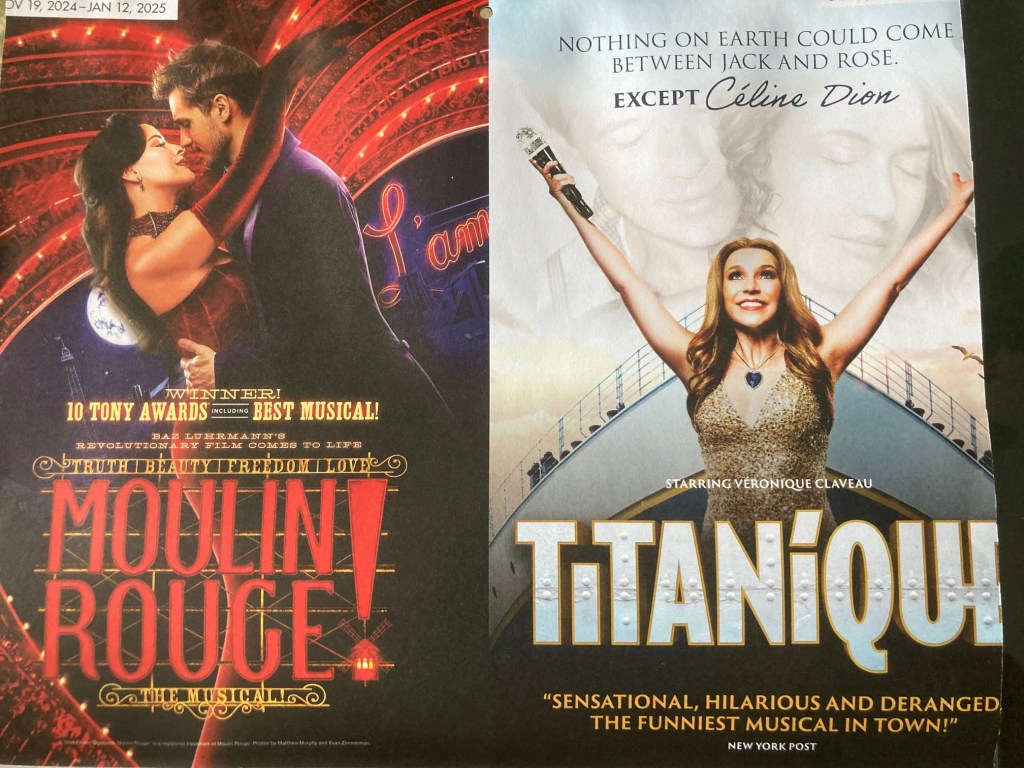
I recently saw two Mirvish musicals in the space of a week. For some, that would generate excitement, and for others, a sense of pure terror. For me, the result was somewhere in between. The two musicals in question are Moulin Rouge, currently playing at the CAA Ed Mirvish Theatre and Titanique which can be seen at the CAA Theatre. And yes, if the names of the theatres are confusing, the former has entrances on Yonge and Victoria streets, south of Dundas, while the latter is on Yonge, south of Bloor.
To be honest, I wasn’t particularly hopeful heading in to either of these musicals. I had heard mixed mutterings about Moulin Rouge, and I still haven’t seen the film Titanic, so it is clear I am not exactly the target audience for either of these shows. Moulin Rouge is set in the reknowned Parisian night club associated with the cancan. Titanique, meanwhile, is set on the ill-fated R.M.S. Titanic.
I left Moulin Rouge feeling quite bleak about the future of the musical genre, but left Titanique reassured somewhat that there might still be hope.
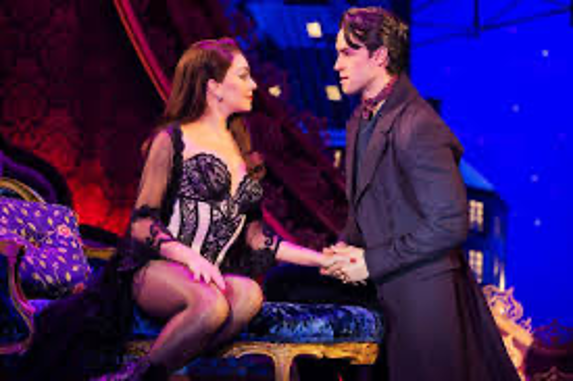
Moulin Rouge has the advantage of a bigger stage, better sound equipment, and a splashy marketing campaign; it manages to squander these in a staggering way. The plot is thinner than cup-a-soup. And yes, I am aware that no one goes to a musical expecting exposition worthy of Miller or Williams, but this felt like it might have been cooked up by middle school students serving detention. Somehow, we are expected to believe that the Parisian night club is in such financial trouble that Harold Zidler, the emcee and possible owner of the club (a fact that is never really made clear), will have to shut it down unless he can get his star Satine to seduce The Duke of Monroth into injecting huge amounts of cash into the operation. Satine, however, has fallen for an American songwriter named Christian, who she at first mistakes for the Duke. Oh, and by the way, she is dying of consumption, but is still able to go onstage in ridiculously tight outfits and sing and dance like a whirling dervish. The T.B. produces a light cough now and then but doesn’t stop her from show stopping routines. But the plot isn’t even the show’s biggest weakness. That honour is held by the characterization which is shockingly shallow. Part of the problem is that the characters are so busy singing bits and pieces of about seventy-five different songs that are supposed to reveal how they feel, they don’t have time to engage in any conversation. And when I say bits, I mean sometimes it is just a single line of a song. For much of the evening, I felt like I was at some abortive karaoke night. In addition, much of the characterization is just lazy. Rather than having the actors incrementally reveal their personalities and motivations, we are just told about them by other actors. We are told that the Duke is vicious and not the kind of person you want to cross; we are similarly told that Satine was born in poverty and had no choice but to sell her body to survive the mean streets. Nothing in their performances is subtle. The real sticking point for me though was the unbelievable love affair between Satine and Christian.
Satine and Christian- an improbable pair that inspire indifference
They hardly know each other but are somehow smitten. At least in tradtional romantic musicals, the leads can sing whole songs to try and reveal their feelings. Here, we get little snatches of songs, so the relationship seems even more tenuous. I am not arguing with the quality of the singing and dancing, nor the costuming and lighting which certainly attracts our attention. But to actually expect us to care about any of these characters is a big ask. Summing up the insignificance of the show’s plot is the ending which immediately dropkicks the somber tone with a high octane curtain call that screams to the audience: “Never mind about the plot, we’re going to sing and dance again.” What depressed me the most was that the audience members, or a good many of them, seemed enthralled and were on their feet. Though as a standing ovation is the norm these days, it is perhaps difficult to judge exactly how thrilled the crowd was. Still, if this is the future of musicals, why not dispense with the plot altogether and just sing and dance?
To say that I am not a Celine Dion fan is an understatement of epic proportions. Scrutinizing my program and learning that the main character in Titanique is Celine Dion (as played by Veronique Claveau) led me to some pre-traumatic stress. Was I ever wrong. The play is basically Celine Dion hijacking the Titanic museum tour with her memory of what really happened on the ship, which is to say what really happened with the Rose and Jack love story that is the core of James Cameron’s iconic film. The premise is ridiculous because though she sings “My Heart Will Go On” in the film, Celine Dion was born in 1968, 56 years after the sinking of the ship. But this production embraces the inanity of its plot, whereas Moulin Rouge tries to dance around it. Claveau is marvellous as Dion; not only does she have a lovely voice, but she has perfected the singer’s speech mannerisms, Quebecois English and her facial expressions. It’s hard not to laugh when Claveau interacts with audience members and nails the ego of Dion that is somehow made less caustic because of her eccentric wording. The supporting cast was equally strong, and this was on a night when both Rose and Jack were being played by standby performers.
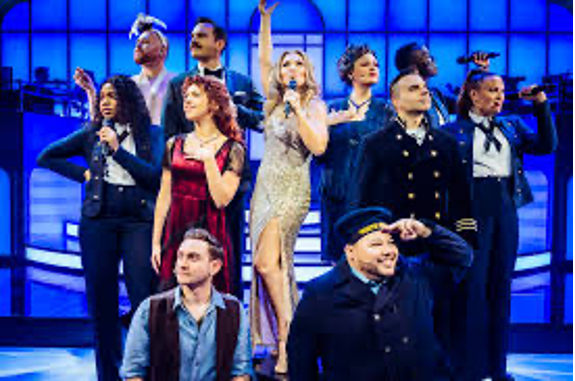
The cast of Titanique, Ning, front right and Bernard, back left.
Christopher Ning as The Seaman/Iceberg Bitch/Tour Guide and Peabo Bryson (how’s that for a collection of roles?) was fantastic, and so was Constant Bernard in the role of Rose’s mother Ruth. The Iceberg Bitch role features the stout Ning in Tina Turner costume replete with high heels, singing and dancing with Turner’s trademark energy. The show works because it doesn’t take itself seriously. The cast make a point of skewering the shallow nature of musicals; at one point, shortly after meeting Rose, Jack responds after a few seconds of dialogue, “Well, now that I’ve got to know you” and then breaks into song. Even the audience advisory is lighthearted warning of some coarse language, sexual innuendo, rowdy humour, and A LOT OF CELINE DION MUSIC. One of the problems some of the performers faced was headset microphones that were unresponsive at times and emitting static at others. When Erica Peck who is playing Molly Brown is struggling with her microphone trying to sing “All by Myself”, Bernard hilariously improvises and joins her in a short lived duet before she asks him what he’s doing. This was just one moment of what seemed like a fair bit of improvisation that suited the moment and the unexpected technical glitches. The actors sure looked like they were having fun, as opposed to the cast of Moulin Rouge with their polished lines and plastic smiles. Whereas Titanique featured lines that referenced Toronto in Commedia Dell’arte fashion, the only local mention at Moulin Rouge was after the show when the cast was trying to do some fundraising. While the Parisian club is supposed to represent a legendary kind of raciness, there was much more edge to the fast paced dialogue and the eggplant prop in Titanique than in the “Lady Marmelade” lyrics and gyrations of the performers trying to set the tone in Moulin Rouge. It wasn’t just all comedy. The performers could really sing, especially Ning, Peck and Kaylee Harwood who played Rose. And the script was every bit as demanding physically as the dance numbers in Moulin Rouge. But it was the comedy in the form of body language, facial expression, writing that poked fun at both Cameron’s film and the musical genre, and the local references that made the show memorable. Perhaps the lesson here with musicals these days is that as tired as the genre is, there are always ways of reinventing it to entertain.
I recently returned home from my first trip to Newfoundland. It was a long-awaited trip as my wife and I had heard so many great things about the province, and my wife was keen to see her paternal grandmother’s home town as well. Newoundland did not disappoint. It is a gorgeous place with stunning, rugged scenery, interesting wildlife, friendly inhabitants and a unique history.
Newfoundland and Labrador (the proper name of the province since 2001, but one I did not use above because we did not get to Labrador) is a place that all Canadians should see, and if the tourism numbers are accurate, it looks like many are trying to do just that. Gros Morne National Park is huge and beautiful. From the fascinating Tablelands, one of a small number of places where the Earth’s mantle has actually been pushed up above the surface, to Western Brook Pond, a pond in name only, but actually a former fjord that was cut off from the sea by land that rose after glaciers retreated, Gros Morne is visually stunning and geologically fascinating.
The breathtaking Western Brook Pond in Gros Morne National Park
One of the reasons the Tablelands has been designated a UNESCO heritage site is that it helped confirm the theory of plate tectonics forwarded by Alfred Wegener and others. We did not get a chance to drive up to St. Anthony’s and see L’Anse aux Meadows, but we have heard great things from those who have visited the place where evidence suggests Vikings settled over a thousand years ago. It is the only undisputed site of pre-Columbian contact between Europeans and Americans outside of Greenland. As it turns out, driving up there would have allowed us a glimpse of icebergs, which this year were hard to find elsewhere owing, it seems, to a mild winter.
Stunning scenery is the norm in Newfoundland as the combination of mountains, coastline and lighthouses provide an exquisite backdrop for the camera wielding tourists. Music and theatre is also in ready supply, and the three formal performances we saw spoke to the talent of the performers and the charm of the culture. And it’s not just the versatile performers who play in shows like Anchors Aweigh and in the Twillingate Dinner Theatre or the polished trios who perform in the pubs on George Street in St. John’s. Every boat tour we were on featured live music, either the tour guide singing, or singing accompanied by some combination of guitar, fiddle, banjo and accordion by other members of the crew. In fact, at the Twillingate Dinner Theatre, the musician/actors also help set up the room and cook the food, which is no small task considering the almost 200 people who make up the audience for the show which runs six nights a week.
Whether in the bars on George Streetor on boat tours, music is central!
The hiking in the province is also phenomenal, providing all levels of hikes on clearly marked and well-maintained trails. Towns like Twillingate, Bonavista and Trinity boast wonderful accomodation, stunning scenery and plenty to do. St. John’s is also a delight to visit, with some wonderful pubs, great museums, a thriving music scene and as a base to get to the many wonderful attractions that surround it.
Yet, as much as the province is a magical place, I believe that what it isn’t is as important as what it is in the tourism bonanza it is experiencing. I will start with arriving in the province at the airport. We flew into Deer Lake, but this equally applies to the St. John’s airport and the Gander airport which we visited as well. They are navigable and the polar opposite of the sprawling, multi-terminal complexes with which so many of us have to regularly reckon. Renting a car in Deer Lake was a breeze (granted, it is important to reserve well in advance). It took about five minutes, and as the baggage pick up was about fifty feet from the rental car desk, it probably took us a grand total of fifteen minutes from the time our plane landed till we were in our car and setting out for our first destination. I cannot imagine that sequence of events happening that quickly in other tourist hot spots. Driving in Newfoundland also offers a stark contrast to driving in the GTA and other densely populated areas. To begin with, the roads are one lane on each side, with the exception of the Trans Canada Highway, which is also often just one lane on each side, but near St. John’s has two lanes on each side. This prevents the constant veering from one lane to another trying to pick the fastest moving one that seems to be the sport of choice of so many drivers on the roads in big cities. On the Trans Canada, there are frequent passing lanes which means drivers know that they will have a chance to pass extremely slow drivers soon, and hence, do not have to tailgate them waiting for a clear moment to leapfrog. There is generally a “what’s the rush?” attitude among the drivers in Newfoundland which is contagious. In fact, in two weeks of driving (and we drove every single day), I heard only one honk of a car horn and that was exiting from a St. John’s strip mall. Perhaps it is a sense of community that means people don’t honk at their neighbours and it speaks volumes about the lack of community off the island which has individuals laying on the horn and casually giving other drivers the finger without a thought that it might be someone you know or care about. And while gassing up is more expensive on The Rock (we likely paid an average of 14 cents more per litre than we might have in the GTA), you don’t have to prepay and go through the rigmarole of estimating how much gas you will need, nor do you have to spend your time declining an array of car wash and auxillary offers on the keyboard at the pump. The trust that most places exhibit is refreshing. Accomodations often leave keys in the room door for you or in a mailbox. The renowned friendliness of Newfoundlanders was constantly on display. A couple we had never met, but who were friends of friends of ours welcomed us into their home and served us a wonderful lunch. When it happened that we arrived at accomodations early before the technical check in time, our hesitations were genially waved away and we were shown to our clean room where more often than not, attention to detail was fabulous. Near Grand Bank on the Burin Peninsula, the Bed and Breakfast operators of the place we stayed routinely bring a “Newfie lunch” or night time snack to their patrons. We enjoyed homemade lemon meringue pie that compared favourably to the best I have ever tasted. At our Twillingate B and B, talking with our hosts and other travellers at breakfast was often a highlight; on Canada Day, not only did we sing the national anthem in English and in French before breakfast, but afterwards, a visitor from Newfoundland gave a wonderful short talk on the history of “The Ode to Newfoundland”. So part of the attraction is that there are fewer people, they are generally moving at a slower pace, and that they are overwhelmingly trusting and friendly.
But there is something else as well that draws those from away to The Rock. It is a combination of a unique and isolated history (both age old and very recent), culture, geography and climate that almost approaches myth. The coming and going of the glaciers created numerous coves, inlets and bays, and these sheltered, shallow waters allowed fish to thrive; they offered protection from strong currents and predators, and access to nutrients and food sources. Much of the history of the land is reflected in the development of fishing boats, but also in the far too frequent disasters at sea caused by the unpredictable and often brutal weather. If you visit Newfoundland and don’t hear about the infamous Cod Moratorium of 1992, you aren’t listening very carefully. It was devastating for the people not just because 30,000 people were suddenly out of work, but because beyond economic consequences, it accelerated the demise of a way of life inextricably bound up in the cultural identity of the people. More and more people, especially young ones, felt compelled to leave the province to seek work elsewhere. In a way though, this reinvigorated the provincial folk music, as the tragic circumstances of the disappearing cod proved an apt subject for haunting ballads. As it so happened, two days after our arrival, the Moratorium was lifted after 32 years of being in effect, though the decision is still a matter of some debate. Adding to the almost myth like recent history were the campaigns to resettle people in remote outports to larger places because the government said it was difficult to provide services to such widespread and tiny communities. This adds to the sense of an endangered way of life that large and often impersonal forces were imperilling. This dominant way of living and the recent history that places it in jeopardy is not as marked elsewhere in Canada. Sure, one could claim that the loss of manufacturing jobs in Canada is a parallel, but manufacturing does not quite equate with fishing in terms of how central it is to the geography and culture of the land’s people.
And what has happened in Newfoundland in recent years is quite remarkable. The economy has pivoted and tourism is now a dominant force. Newfoundlanders, perhaps by necessity, have figured out that people elsewhere are clamouring for a place that is not only gorgeous, but a place where the people are bound to their history, proud of their culture but welcoming to all, a place where folklore and folk sayings abound and where a resilient spirit is a necessity. There is a united purpose in the province which greets tourists wherever they go. I never once heard a native Newfoundlander disparage a different spot on the island or a different activity, even if it was directly competing with them for the tourist dollar. They are proud of the beauty of the land and delighted when others enjoy it.
Sea Stack at Spiller’s CoveScenic view at Crow HeadTypical scene near Twillingate
I never heard one complaint about the weather, which was often rainy and mauzy (local word for foggy or misty); a common refrain is that “there’s no such thing as bad weather, just poor clothing”. If native Newfoundlanders are disdainful of the tourists with their cameras and their iceberg alert apps, I never once saw evidence of it. Even when the tourists are being teased, it is a good-natured form of ribbing, and never in a tone that is bitter or spiteful. As we were being screeched in on a boat in Bay Bulls, the crew member joked that “it’s not that Newfoundlanders speak too fast, but rather that visitors listen too slowly.” Sure, maybe the joke is on me and away from tourist ears there might be cynical laughter at the “idjets” who come from away and pay to kiss the cod (or in an adaptation at our screech in, kiss the arse of the toy puffin that’s been dipped in the sea), but I really don’t think that’s the case. Those who go away genuinely miss home and we heard of so many families where children were returning to Newfoundland after working away for a spell.
And so I’m home again, and getting reacquainted with the aggressive drivers, the suspicious looks on people’s faces and the general alienation that comes from a place where people are largely disconnected from history, from a common culture and from the particular geography of the land. Yet, I’m still humming “Sonny’s Dream” and the songs about longliners and salt water joys, and in my head, I’m still picturing the beauty of the land and the sea, and the magic of the people and the language. My message to the people of Newfoundland and Labrador: “Stay where you’re to till I comes where you’re at”.
Once upon a time, there was a fine city on a great lake. It was filled with people from all over. They came because the city had fine restaurants, intriguing neighbourhoods, exquisite parks, dynamic theatre and wonderful museums. It’s true that the city also had traffic jams, overpriced real estate and long, grey winters, but still people flocked to the city. And the people were very proud of their city; they were proud of their big tower and their relatively low crime rate and their relatively clean streets. Mostly they were proud that they weren’t part of the neighbouring big country that was always in the news (even though they tried very hard to be just like that big country). But no matter how many people came to that city, and no matter how proud they were of their tower, their diversity and their museums, the people of the city couldn’t truly be happy. And that’s because the city was cursed.
No one knows exactly when the curse began and why the curse happened. In fact, some people (admittedly a smaller and smaller number) didn’t even believe in the curse. But the curse had such a grip on the citizens that even in their happiest moments, there was a little piece of their mind that thought of the curse, so that they were never completely happy.
One of the strangest things about the curse was that it was impossible to come to an agreement about how best to end it. Some powerful men thought the way to break it was through toughness so they hired strong, aggressive men to bash it into submission. But that didn’t work. Some other powerful men thought the way to end it was through finesse so they hired fast and skilled men to dazzle it away. But that didn’t work either. Finally, it was agreed by many that what was needed was a combination of toughness and skill, but that failed like all the other plans.
The curse seemed to grow in strength because the people in the city genuinely believed that each year brought the best chance to end it. And so the people of the city would nod in approval as the current wizard would calculate the numbers and trade away some of the future to achieve just the right chemistry to kill the curse. And each year they would seem to forget how it felt when they had been tricked by the curse; they would forget how they had grown very quiet when the curse reappeared; they forgot how they promised not to care any more. When the trees turned colour, some people refused to pay attention, but by the time the snow fell, most were watching, and by April, the frenzy was back as if they had never had their hearts broken time and time again.
And so if you ever visit this fine city on the great lake, enjoy the time you spend there but keep in mind that the city is cursed. And a curse is a powerful force that resists the will of mere humans to overcome it.
Part of the frustration many people have been experiencing regarding the COVID 19 (et variants) pandemic is the seemingly contradictory expert opinions being expressed almost everywhere you look. Never in recent memory has science been looked to more urgently for guidance to a crushing problem. The spectacle of governments cueing their resident expert or news sources clamouring to get a sound bite from the epidemiologist du jour has become standard operating procedure. It is no surprise that politicians want to have scientists on side given the reverence most citizens have for science. As it is strongly associated with the technological breakthroughs that we have come to take for granted, science gets good press. Does anyone really want to go back to a time without electricity, the internet, smart phones, diagnostic imaging, commercial flight, plastic and modern agriculture? Even those non-conformists who yearn to live off the grid depend on science for energy storage, countertop gardens and composting toilets. No wonder politicians at every level want to be perceived as having scientific support in their pandemic policy making. Not only does it legitimize their decisions, but it gives them a convenient whipping boy if things go south—“Don’t blame me; I was just following the scientific experts.” Even those campaigning most aggressively to re-open the economy are loathe to be seen as anti-science. So, how, one might ask, is it that both governments and those criticizing the government can claim to have science on their side? The answer may stem in part from a basic misunderstanding of what exactly science is.
Science is not a monolithic discipline. In fact, part of what makes science so fascinating is that it is in a constant state of flux. Yes, there are many topics on which a vast majority of scientists will agree, but especially with emerging developments such as a new and mutating virus, there are bound to be many differences of opinion among educated practitioners. The history of modern science is not merely one of continual refinements, but just as importantly, outright transformations of what was considered accepted knowledge.
As Thomas Kuhn pointed out in his landmark book The Structrue of Scientific Revolutions, scientists do not operate in a bubble of rationality, but instead are influenced by the prevailing intellectual framework, social assumptions and paradigms of the era in which they toil. When there is a paradigm shift in science, it is not that the data has changed fundamentally, but rather that there is a new way of viewing the data. For example, the transition from Newtonian mechanics to quantum physics is largely a change in assumptions about the universe. A question like “what does the data mean?” is unhelpful if it does not take into account the conceptual frameworks being utilized in assessing the data. Even in periods of what Kuhn referred to as “Normal Science”, there are anomalies and stubborn exceptions to the prevailing model. When these outliers begin to build up, science enters a “Model Drift” phase which sees a gradual erosion of confidence in the paradigm. As more and more scientists desert the prevailing conceptual framework, a “Model Crisis” phase is begun which ends in a “Model Revolution”. Once the paradigm has shifted, a new period of “Normal Science” begins and the cycle repeats.
There are a few key takeaways in all of this for the layperson. The first is that all observation in science is seen through the prism of a particular concept. The second is that there is probably no moment when all scientists will have full confidence in the prevailing concept used to understand the world, and many moments where there is a significant number of scientists who are extremely uncomfortable with aspects of the paradigm. The third is that total objectivity is pretty well impossible in a discipline subject to such strong social, economic and political pressures bearing down on human beings who are naturally replete with a series of biases, assumptions and perception filters.
When we apply this to the current pandemic, we should see that it is unreasonable to expect science to yield a single, straightforward answer to our questions. Not only is the situation rapidly evolving, but the answers we are looking for involve issues in the even more erratic and unpredictable disciplines of social science such as economics, psychology, history and philosophy. The question of “What is an essential service?” is really a thorny, philosophical one. Similarly, the question “What is the best method to motivate people to stay home?” is a psychological one that has bedeviled many municipal leaders. While scientists can hope to achieve controlled conditions by devising ingenious experiments with necessary control factors, social scientists deal with the most complex and unpredictable subjects of all: human beings. Add to this the role of the media in directing the conversation based on what will attract viewers, and you have a scenario in which confusion, frustration, disagreement and laying blame are quite likely inevitable.
At least the next time we want to know ‘what the scientific answer is’, maybe we won’t be so naïve to expect a single, definitive response.
There are certain years that contain events so prominent that they take on an understood identity. 1789, 1848, 1914 and 1929 are such years. For America, 1968 is also such a year. The country was polarized and awash in violence. In January, the Viet Cong’s Tet Offensive convinced many Americans that the war in Vietnam was nowhere near a successful conclusion. As President Johnson increased U.S. troop involvement in that conflict, anti-war protest at college campuses and beyond ratcheted upwards. The daily death tolls of American soldiers were inescapable. Much of the promise of progressive leadership disappeared when Martin Luther King Jr. and Robert Kennedy were both assassinated in the span of sixty-three days. Riots were common and the predominant feeling for many was of a downwards spiral.
That year, the Republican party held their national convention in Miami and endorsed a ticket of Richard Nixon and Spiro Agnew. The anti-war constituents saw their only hope in the Democratic party. Without Kennedy, hope turned to Eugene McCarthy. In the end, the Democrats chose Hubert Humphrey and Ed Muskie at their national convention in Chicago.
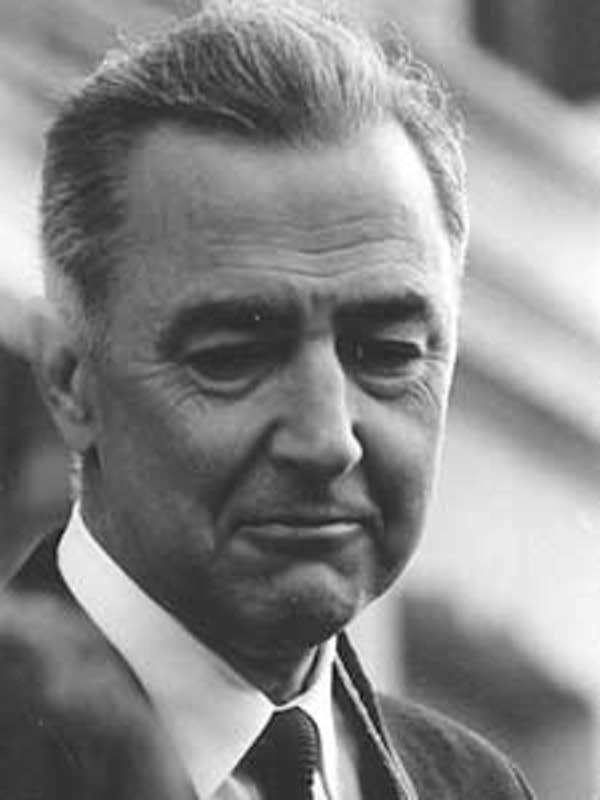
Eugene McCarthy and Bernie Sanders, progressive candidates who were passed over for the Democratic nomination.
In the years that have passed, that convention has perhaps become better known for the way America treats protest than the official endorsement of politicians practically indistinguishable from the establishment Republicans. Chicago became the place to be that August for anyone disenchanted with the U.S. government. The violent reaction to protestors by the Chicago police under the direction of mayor Richard J. Daley was front page news and the protestors knew it evidenced by their shouts of “the whole world is watching”.
Which brings me to the film The Trial of the Chicago 7, currently available on Netflix. The trial took place from September 1969-February 1970 while Nixon was president and John Mitchell was his attorney general. As the film makes clear, the trial was a thinly veiled attempt to round up divergent anti-government forces and throw them in jail based on a law that had never been used before. The so called “Rap Brown Law” made it a crime to cross state lines with the intent of participating in mischief. Mitchell had attorneys round up Tom Hayden and Rennie Davis of Students for a Democratic Society, Abbie Hoffman and Jerry Rubin of the Youth International Party (Yippies), David Dellinger, a conscientious objector and anti-war movement organizer, Bobby Seale, co-founder of the Black Panthers and Lee Weiner and John Froines, two lesser known activists. What followed was one of the most notorious trials of the decade complete with an unhinged judge, thinly veiled racism, courtroom theatrics and underhanded tactics.
From top left clockwise, Rubin, Hoffman, Hayden, Davis, Dellinger, Froines, Weiner and Seale
The trial has long been a well known cultural touchstone, but what makes it and the Aaron Sorkin film about it so fascinating now are the numerous parallels between 1968 and the present day.
SPOILER ALERT—WATCH THE FILM BEFORE CONTINUING FURTHER.
Some of the parallels are depressingly obvious. The racist treatment of Black Americans is evident in the inclusion of Seale in the trial to begin with and then the refusal to grant him basic rights during the proceedings. Seale being bound and chained in the courtroom is the most lasting image of the trial and one of both unjust authority and blatant racism. Fifty years later, the deaths of George Floyd and Breonna Taylor and numerous others speak to the systemic racism that is still very much a part of the American fabric. Familiar too is the extreme polarization of Americans; the division over the war in ’68 is matched today by the schism over Trump. Lack of faith in the justice system is another link between now and then. Judge Julius Hoffman’s bias and recklessness reminds us that the U.S. Supreme Court has been ideologically stacked and that it is difficult to function as an independent branch of authority when the legislative branch shapes the judicial one in such a partisan manner. Police brutality unleashed in Chicago and sanctioned by Daley is painfully reminiscent of the never ending video clips of contemporary police engaging in excessive and often fatal force against unarmed citizens. So too can we see echoes today of the division within the Left. Where Hayden and Hoffman clashed on tactics, today we have a fundamental division within the Democratic Party about how to proceed. Bernie Sanders and Elizabeth Warren are as distanced politically from Joe Biden as Biden is from Trump, if not more so. Interesting too that the Democrats chose the conservative Humphrey in 1968, just as they ultimately chose the safer Biden this year. Even Ramsey Clark’s refusal to participate in the transition to John Mitchell as Attorney General reminds us of Trump’s petulant refusal to prepare for a Biden administration.
The more things change…
Meanwhile, some of the connections between the film and our present are subtler, but still edifying. Two of the more progressive jurors receive written threats supposedly from the Black Panthers but clearly arranged by the prosecution as a means of removing them from the trial. Is it that different from right wing extremists who commit vandalism and arson during protests to paint peaceful protesters as radical threats and to sow fear among the ignorant? The FBI and other organizations infiltrated protest groups with people working to undermine them and then called on them as witnesses in the trial. Today, huge numbers of people are manipulated on social media by forces that have ready access to their interests and opinions and the means to influence them. Americans in 1968 heard nightly statistics on the number of U.S. deaths in Vietnam while Americans in 2020 tune into daily figures on COVID testing. The prosecution in the film successfully bars critical evidence from the trial on the grounds that it could compromise national security just as the current Trump administration has done on numerous occasions including Trump’s impeachment. Finally, a President uses his position and resources to attack those he feels slighted by—sound familiar?
Lawyers Leonard Weinglass (far left) and William Kunstler (far right) defended the Chicago 7
One of the most compelling scenes in the film is a disagreement Abbie Hoffman has with Hayden about the nature of what they are facing. Hoffman calls it a political trial while the pragmatic Hayden says there’s no such thing as a political trial, but only criminal or civil trials. In light of the past fifty years, I think we can agree with Hoffman. As much as someone snatched from 1968 into our world might be bewildered by the internet and other technological advances, the racism, political circus, polarization, disillusionment with authority and general despair would inevitably evoke a forlorn déjà vu. Like so many films about recent history, The Trial of the Chicago 7 succeeds not only because of its subject matter, but because it’s holding a mirror to ours.
I was at the bank the other day, or rather I was outside the bank spaced six feet away from the other customers, waiting for a bank rep to come out and deem us worthy of entrance. The ‘bank bouncer’, as I like to refer to this new breed of employee, determines whether you really need to go into the bank or if you could achieve your financial transaction online in which case you are shooed away. This, of course, is all in the name of social distancing and flattening the curve. So, understandable of course. But a part of me wonders if this COVID-19 pandemic is playing right into the hands of not only banks, but other businesses. You will recall of course that many businesses have for years been in the habit of reminding customers that what they are trying to do in person or over the phone can actually be done much more conveniently and efficiently online in the comfort of your own home and at a time of your own choosing. In many cases, actually securing a phone number for customer service requires an effort similar to Frodo’s getting into Mordor. I was trying to find a phone number for help with a computer printer the other day and was continuously redirected to e-mail, other websites or even live chat. If by some miracle, you are actually able to procure a phone number, you are warned about the high volume of calls and generally made to feel like you have endangered lives by making a phone call, after which you will be put on hold to the accompaniment of music that has even been rejected by elevator soundtracks as too sadistic. The wait can be half an hour or more, but it’s a pandemic so what else do you have to do if you have the time to call customer service in the first place? The point is that most businesses discourage you from even phoning them. This retreat from customer service started with we don’t wish to actually see you and has progressed to we don’t even want to talk to you.
Now what, you may well ask, does this rant about customer service have to do with commercial real estate? Well, over the past seven weeks, it has been suggested that getting back ‘to normal’ is something that may not happen for a long time, if ever. Ontario is moving very cautiously and Prime Minister Trudeau has said that normal is a “long way off”. There have also been rumblings that we may never totally replicate our pre-pandemic way of living. This may be especially true in the area of commercial real estate.
There is no doubt that fragile small businesses such as restaurants will see many closings. Even with government assistance, many restaurants and bars will not be able to survive the lockdown. That means there will be an increase in supply of commercial real estate. Great news for people looking to open up a small business, but how many people are able to open a small business now? Certainly not businesses that rely on providing service to people in close quarters.
But the real paradigm shift may have been something that was happening slowly before the pandemic, but has now been accelerated by COVID-19. This is the switch away from bricks and mortar to online platforms. Certainly, this was already underway in the retail sector. But it is not just retail stores that will be rethinking the money they spend on renting physical space. Now that many businesses have asked some of their employees to work exclusively online, they may be noting that the gap between productivity in the lockdown and productivity in a ‘normal’ business environment is rather slender. It may be common for CEOs and Board Members to start asking the question ‘is it really worth it to rent as much space as we do?’. If employees can meet regularly on Zoom or other online video conferencing apps, the thinking might go, then what is the necessity of providing them with their own office? One or two multi-purpose rooms might be enough for a large firm that needs to physically meet with clients from time to time. You can be certain that you will start to receive assurances from companies that while face to face experiences will always be important to them, safety and economic realities have forced their hand to reduce their real estate footprint.
So while the ‘new normal’ may not be such great tidings if you are a commercial realtor, it may actually present our communities with some new opportunities. Perhaps the numerous malls that dot our landscape can be repurposed as homeless shelters, affordable housing, community centers or cultural/athletic facilities. Perhaps with some zoning flexibility, office buildings can be transformed to student residences, artist’s colonies or designated spaces for refugees or victims of domestic abuse. Ironically, companies’ enslavement to profit may force society to change the way they utilize spaces.
This may be part of a larger reinvention of cities as urban centres start to re-evaluate how much space is devoted to getting in and out to work and play, and how much space is dedicated to actual living.
Remember when “liberty” was an inspirational principle, as in the first of the three guiding values of the French Revolution, or the name of the revered statue that has welcomed millions of immigrants to American shores? Those, apparently, were Liberty’s halcyon days. Now, we are confronted with protestors mid-pandemic, waving flags and symbols of a more dubious nature, demanding city lockdowns be ended in the name of liberty. John Stuart Mill could only blush. It was Mill in his influential treatise On Liberty who endeavoured to establish criteria for when authority could legitimately restrict individual freedom. Mill quite rightly averred that a person should be left as free to pursue their own interests as long as this does not harm the interests of others.
Admittedly, there are cases where it is difficult to identify how pursuing an interest could harm the interests of others. For example, some people might say the decision to smoke cigarettes, as long as there are no captive people around experiencing second hand smoke, is an individual one. If I want to smoke, the argument goes, then it will affect me and that’s my business. Or is it? For if continued smoking results in lung cancer or any of the other diseases that regular smoking has a correlation with, where do you think the individual goes? Yes, to a hospital where they will occupy a bed and the attention of medical authorities. Maybe that bed and medical staff are not available for others as a result. So, there are times in a high tech, fast paced, interconnected world when it is difficult to disentangle personal and communal interest. Opening up cities to “normal” behaviour in a pandemic is not one of these tricky cases. It is dead simple. Going to a hair salon or a gym or a restaurant or a theatre in a pandemic is not a liberty you can with any legitimacy claim. It is the same reason why people are not allowed to drive drunk or serve food at a restaurant without regulation.
So, what are we to make of these protestors? These protestors, it should be remembered, are a tiny minority of the population who have received disproportional media attention. Well, I think we can safely link them with the gun lobby and the anti-vaxxers. And not just because in some protests, like in Michigan, there were a number of citizens carrying semi-automatic guns as evidence, I suppose, of their enhanced sense of liberty. No, the reason we can lump these groups together is because, as Anna Merlan has stated, “they don’t think their choices affect other people”.
How is it that you can live in a globalized world and not understand this? What you do or choose not to do impacts others in every sphere I can think of: in the political sphere, who you vote for or whether you vote at all and your level of civic engagement affects others; as a consumer, what you buy or avoid buying affects others; as a citizen, your behaviour affects the natural environment in innumerable ways; as a family member or as part of a relationship, can there be any doubt that what you do affects others?
That liberty has been reduced to the role of ubiquitous mask for selfishness is appalling. That it is now conflated with carrying guns around cities, getting your hair done in the middle of a plague and being able to golf whenever and wherever is sickening. Did Delacroix paint and Bartholdi sculpt so the tanning salons could stay open? And it’s sad too that the natural reaction of the majority of rational beings is now to flinch ever so slightly at the contemporary mention of “liberty”. This is what happens when a noble principle gets hijacked by a small group of cretins that shelter behind the aura of a word that historically has a revered place in our society. Well if usage really dictates meaning, then liberty now means ‘a misguided rationale for harmful and irresponsible behaviour’.
ESTRAGON: That’s the idea, let’s abuse each other.
They turn, social distance and face each other
VLADIMIR: Hand cougher!
ESTRAGON: Hand sneezer!
VLADIMIR: Non-essential!
ESTRAGON: Hoarder!
VLADIMIR: Price Gouger!
ESTRAGON: (with finality) Trrrump!
VLADIMIR: Oh!
He wilts, vanquished, and turns away.
Pause
ESTRAGON: Let’s go.
VLADIMIR: We can’t.
ESTRAGON: Why not?
VLADIMIR: We’re waiting for vaccine.
ESTRAGON: Ah! (he sits and is soon dozing)
Pause
VLADIMIR: Was I sleeping, while the others suffered? Am I sleeping now? To-morrow, when I wake, or think I do, what shall I say of to-day? That with Estragon, my friend, at this place, until the fall of night, I waited for vaccine? That we watched Netflix, Amazon and Trump? But in all that what truth will there be?











 prose by p. rose